Capabilities
Ground & Slope Stabilization
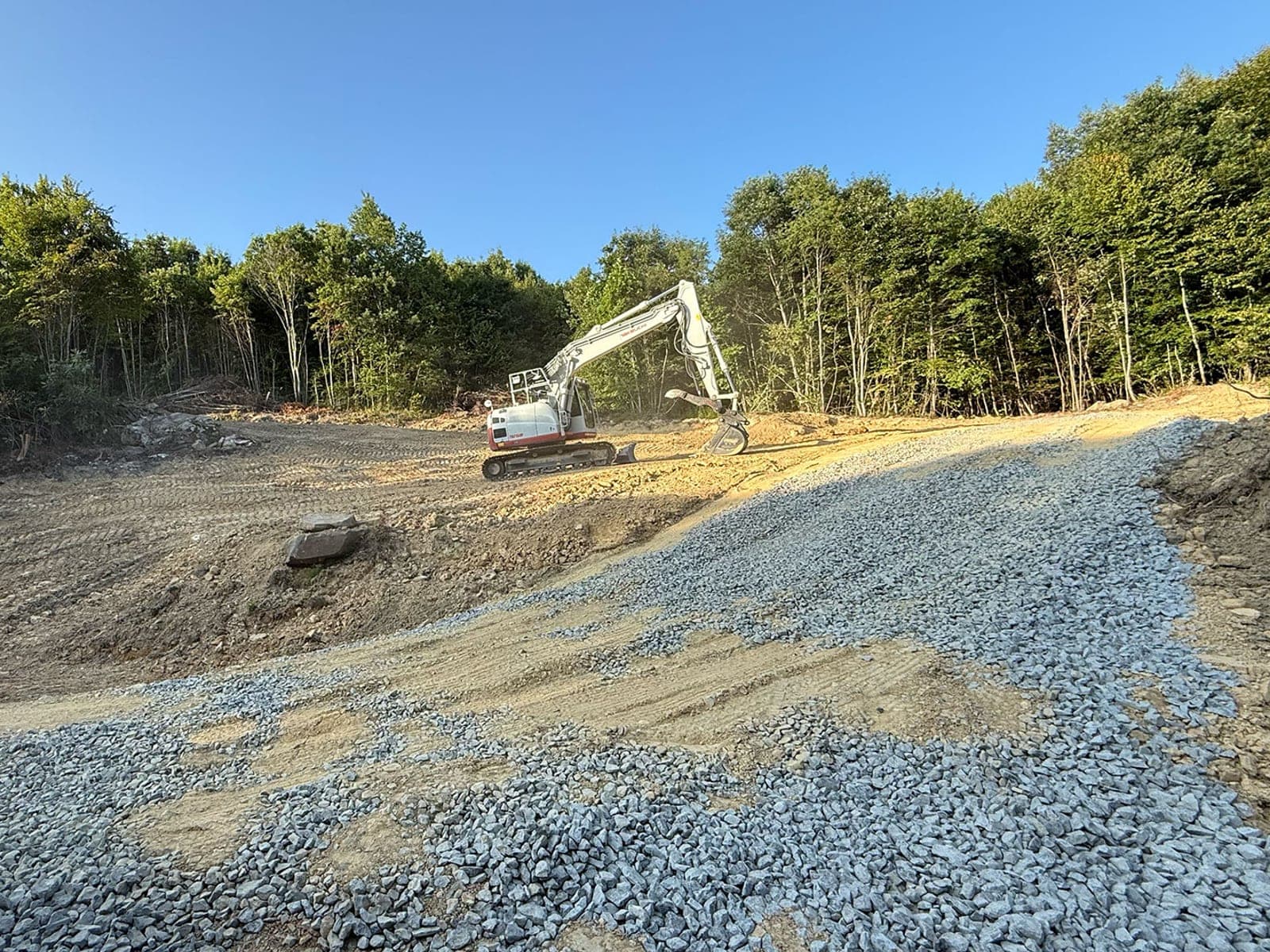
Prevent erosion and structural compromise with engineered stabilization. Retaining walls, riprap, erosion matting, and permanent slope work.
Related Work
Ground & Slope Stabilization Projects
Coverage
Ground & Slope Stabilization Across West Virginia
Headquartered in Summersville, working these counties most often for this service.
Questions
Ground & Slope Stabilization FAQ
Straight answers to what people actually ask. If yours isn't here, call and ask.
Ask Us DirectlyLook for arc-shaped cracks near the top of the slope, ground bulging at the base, trees or fence posts leaning downhill, and pavement or structures cracking in a consistent direction. Persistent wet spots or seeps are a strong indicator. If any of these are present and getting worse season over season, the slope is moving.
For surface erosion and shallow work, usually not. You do need one if a structure, road, or property line is at risk, if the wall will exceed roughly four feet, or if the movement is deep-seated. We will tell you honestly when a job is past the point where it should be built off a contractor's judgement, and we work directly from geotechnical designs.
Riprap armours a surface against erosion and water velocity — it is the right answer for streambanks and ditch lines. A retaining wall holds back a soil mass to create a grade change. They solve different problems, and using riprap where you needed a wall just produces a pile of expensive rock at the bottom of the hill.
Correctly drained and correctly built, decades. Failures almost always trace to drainage that was omitted or that later clogged. We build drainage that can be inspected and maintained, and we show you where it is.