Capabilities
Pasture Creation & Reclamation
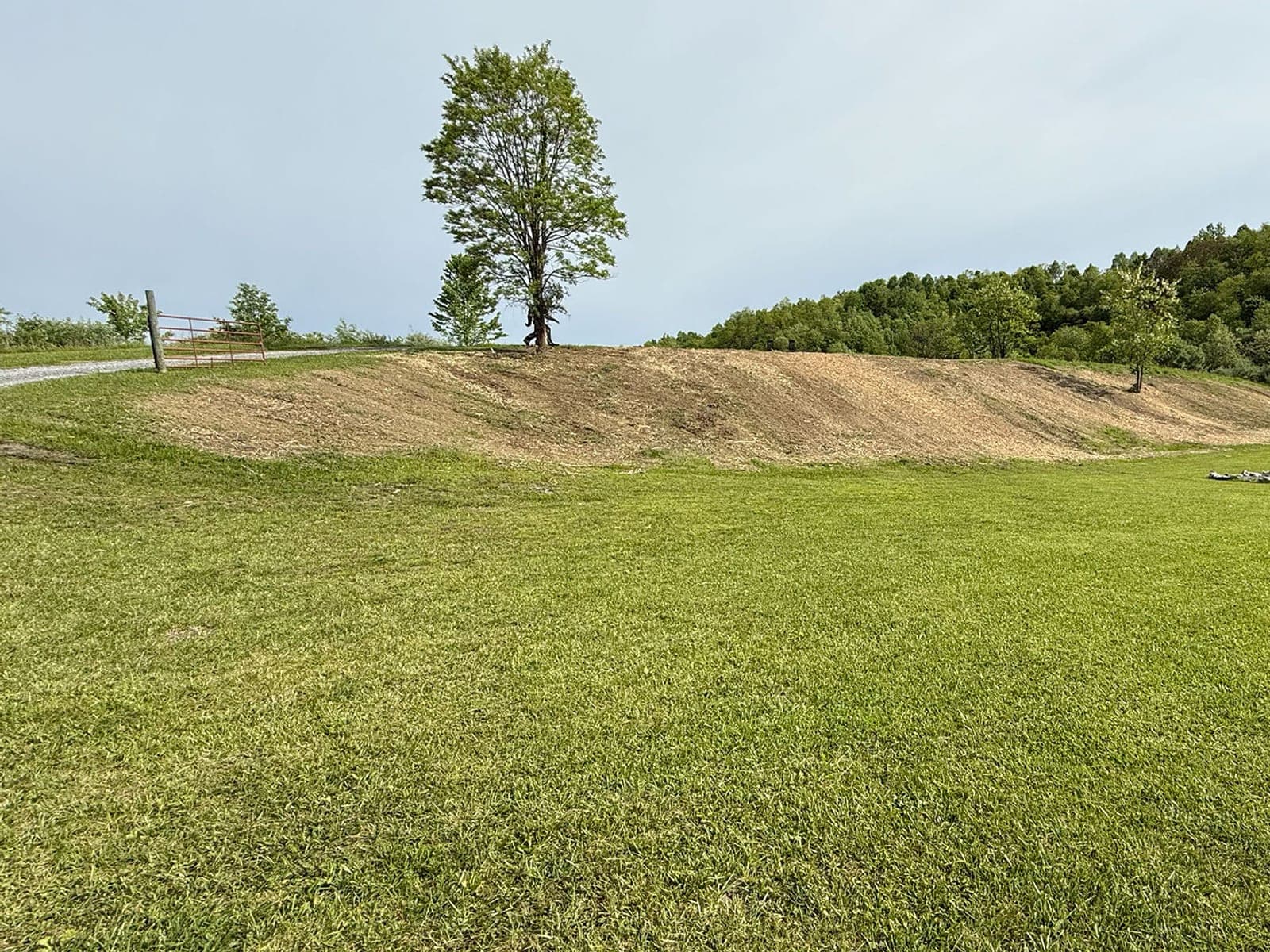
Transform overgrown acreage into productive pasture. Stump removal, stone extraction, seed bed preparation, and final hydroseeding for immediate growth.
Related Work
Pasture Creation & Reclamation Projects
Coverage
Pasture Creation & Reclamation Across West Virginia
Headquartered in Summersville, working these counties most often for this service.
Questions
Pasture Creation & Reclamation FAQ
Straight answers to what people actually ask. If yours isn't here, call and ask.
Ask Us DirectlyLate summer to early autumn — roughly mid-August through September — is the strongest window. Cool-season grasses establish in warm soil with autumn moisture and face far less weed competition than a spring seeding. Early spring is the second-best option. Mid-summer seeding usually disappoints.
Most West Virginia soils are naturally acidic, often down around pH 5.0. Below about 6.0, grass cannot take up the nitrogen and phosphorus that are already present in the soil — so fertilising without liming first is largely wasted money. A soil test tells you the actual rate needed, which can be several tons per acre on long-neglected ground.
Hydroseeding costs more up front and is worth it on slopes, on large areas, and anywhere erosion is a risk. The mulch and tackifier hold seed and moisture in place, so germination is faster and far more even. On small, flat, sheltered areas, broadcast seeding with a cultipacker is perfectly adequate.
Plan on a full growing season. Grazing new grass too early tears out plants that have not yet rooted properly and thins the stand permanently. A light first cutting is usually safer than turning stock out.